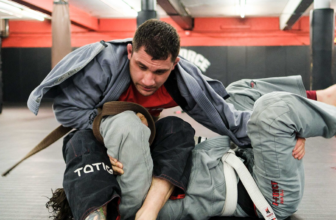
MMA strength training should support striking, grappling, and recovery rather than compete with them. The goal is not to win the weight-room workout. It is to become stronger and more durable while arriving at skill practice able to learn and move well.
Quick answer: Most recreational fighters need two focused strength sessions each week. Build them around a squat or split-squat pattern, a hinge, a push, a pull, loaded carries, and a small amount of explosive work. Keep enough energy for the combat-sports sessions that actually develop fighting skill.
Start With the MMA Schedule
Write down fixed striking, wrestling, grappling, and sparring sessions before adding weights. Hard lifting placed beside hard sparring or high-volume takedown practice can create more fatigue than useful adaptation. Put the most demanding strength work where it has the least effect on priority skill sessions.
A beginner training MMA two or three times each week can often lift on two nonconsecutive days. A more experienced athlete with frequent skill practice may need shorter sessions, fewer work sets, or only one heavier session during demanding phases. Competition preparation should be coordinated with the coach responsible for the overall plan.
What Strength Training Can Contribute
- General force production: stronger legs, hips, trunk, back, and upper body give techniques a larger physical base.
- Position control: pulling, bracing, carrying, and unilateral work can support clinch and grappling demands.
- Power: jumps, throws, and fast lifts performed with sound technique train force to be expressed quickly.
- Training tolerance: gradually prepared muscles and connective tissues may handle practice demands better than an unprepared body.
Strength work does not replace timing, distance, technique, or conditioning. A larger deadlift does not automatically produce a better takedown, and fatigue is not proof that a workout transferred to fighting.
Build the Program Around Movement Patterns
| Pattern | Examples | Why include it |
|---|---|---|
| Squat or split squat | Goblet squat, front squat, rear-foot-elevated split squat | Leg strength through stable bilateral and single-leg positions |
| Hinge | Romanian deadlift, trap-bar deadlift, kettlebell deadlift | Hip and posterior-chain strength |
| Push | Push-up, dumbbell bench press, landmine press | Upper-body force with a shoulder-friendly option for the athlete |
| Pull | Row, pull-up, pulldown | Back, arm, and grip development |
| Carry and brace | Farmer carry, suitcase carry, front-rack carry | Trunk control under a moving load |
| Explosive | Jump, medicine-ball throw, kettlebell swing | Fast force production when performed fresh |
Choose exercises the athlete can perform consistently with available equipment. A simple movement done well for months is more valuable than a complex variation that changes every week.
A Two-Day MMA Strength Template
This is an organizational example, not an individualized prescription. New lifters should learn with qualified supervision and use loads they can control.
Day A
- Low-volume jump or medicine-ball throw
- Squat variation
- Horizontal push
- Row
- Loaded carry
Day B
- Low-volume jump or medicine-ball throw
- Hinge variation
- Single-leg exercise
- Vertical or angled push
- Pull-up or pulldown
- Simple trunk exercise
Use a small number of challenging, technically sound work sets. Finish most sets with the sense that another controlled repetition was available. Grinding repetitions and repeated failure add fatigue quickly and are rarely necessary for a combat-sports athlete.
Keep Power Work Fast
Jumps and throws belong near the beginning of the session, after an appropriate warm-up and before heavy fatigue. Stop a set when height, speed, distance, or coordination drops noticeably. Power work should look powerful.
Olympic lift variations can be useful when an athlete has qualified coaching and enough practice time. They are not mandatory. Medicine-ball throws and jumps can provide a lower-skill alternative.
Progress Without Chasing Exhaustion
Progress can mean adding a small amount of load, performing another controlled repetition, improving range of motion, using better technique, or completing the same work with less strain. Change one variable at a time and keep a record.
When MMA practice becomes harder, reduce lifting volume before removing every strength stimulus. A few quality sets can maintain useful work without creating a second sport inside the week.
Conditioning Is a Separate Decision
Strength circuits can raise the heart rate, but they are not automatically the best conditioning method. MMA classes already contain substantial high-intensity work. Add roadwork, intervals, or circuits only after considering the total week and the athlete’s recovery.
If every session becomes a conditioning test, technical quality and strength progression often suffer. Separate objectives where practical: lift for strength, perform power work while fresh, and condition with an intensity and duration chosen for a reason.
Equipment for a Basic Setup
A commercial gym provides the easiest range of loading options, but useful training can be built with dumbbells, kettlebells, a pull-up station, resistance bands, and a medicine ball. Home equipment must have enough space, stable flooring, and safe storage.
For striking practice outside the weight room, see our guide to choosing a home punching bag and the broader combat-sports Gear hub.
Recovery and Warning Signs
Sleep, food, hydration, and lower-intensity days are part of the program. Persistent performance decline, unusual pain, disrupted sleep, or fatigue that changes movement deserves attention. Stop training through sharp or worsening pain and seek an appropriate healthcare professional when needed.
Strength coaches, MMA coaches, and medical professionals have different roles. The best program coordinates them rather than asking one person to guess outside their scope.
Common MMA Weight-Training Mistakes
- Copying a bodybuilding split without considering skill practice.
- Testing maximum strength too often.
- Turning every lift into an unstable “sport-specific” imitation.
- Adding high-intensity conditioning to an already hard week.
- Changing exercises before technique and progress can be evaluated.
- Using soreness as the main measure of workout quality.
A useful MMA strength program is deliberately ordinary: a few productive movements, sensible progression, and enough restraint to protect the training that matters most.