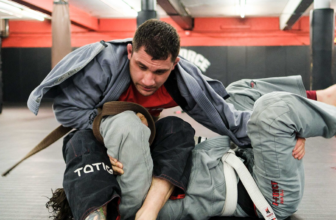
Starting MMA does not require getting “in shape first,” buying a complete fight kit, or proving toughness. It requires finding a responsible beginner program, arriving consistently, and learning how to train safely with other people.
Quick answer: Visit more than one gym if possible. Take a beginner or fundamentals class, tell the coach you are new, wear simple athletic clothing, and plan to train two or three times each week. Buy equipment only after the gym explains what its classes require.
What MMA Training Includes
Mixed martial arts combines striking, clinch work, takedowns, wrestling, and ground grappling. Beginners usually learn these areas in separate fundamentals classes before trying to connect them.
A boxing class may focus on stance, footwork, defense, and punches. Muay Thai or kickboxing adds kicks, knees, and clinch concepts. Wrestling teaches level changes, control, takedowns, and escapes. Brazilian Jiu-Jitsu develops positional control, submissions, and ground movement. MMA class brings those ranges together under its rules.
Choose the Gym Before the Gear
A qualified gym gives beginners a clear class path, explains contact levels, supervises partner selection, and treats tapping or stopping immediately as nonnegotiable. Coaches should be willing to explain how new students progress toward sparring rather than using hard contact as an initiation.
Use our complete guide to choosing an MMA gym to compare coaching, culture, safety, schedule, and cost.
What to Expect in the First Class
Arrive early enough to complete paperwork, meet the coach, and learn basic gym rules. Mention injuries or movement restrictions privately. A typical fundamentals class may include a warm-up, technical demonstration, partner drilling, controlled positional work, and conditioning.
You are not expected to remember everything. Focus on one or two instructions, move at a pace you can control, and ask where to stand or rotate when the class changes partners.
Muscle soreness is common after unfamiliar activity, but sharp pain, dizziness, confusion, or symptoms that feel wrong are reasons to stop and tell the coach.
A Manageable Beginner Schedule
| Weekly frequency | Useful approach | Main risk |
|---|---|---|
| 2 sessions | Repeat fundamentals and allow generous recovery | Progress feels slow if attendance is inconsistent |
| 3 sessions | Mix striking and grappling while keeping a rest day | Adding extra conditioning too soon |
| 4+ sessions | Appropriate after the body and schedule have adapted | Fatigue reducing learning and increasing minor injuries |
Consistency beats a dramatic first month followed by burnout. Start with a schedule that still works during a busy week. Add sessions only when sleep, soreness, motivation, and ordinary responsibilities remain stable.
Beginner MMA Gear
For a trial class, many gyms lend equipment or require only clean athletic clothing and water. Remove jewelry, trim nails, cover cuts, and follow footwear rules. Do not buy equipment based on a generic online checklist before asking the gym.
- Boxing gloves: ask about permitted weight and whether the same pair can be used for bags and partner drills. See our boxing glove guide.
- Hand wraps: learn an approved wrapping method and wash them after use.
- Mouthguard: get the fit checked before contact work.
- Shin guards: buy the style and size used by the gym.
- Groin protection: confirm sport and grappling rules with the coach. See our groin protection guide.
- BJJ gi: needed only for gi classes and subject to academy rules. See our BJJ gi guide.
Our Gear hub organizes the full buying guides by training need.
Partner Etiquette Matters
Training works because both people agree to the drill and intensity. Introduce yourself, listen for restrictions, and match the pace the coach assigned. Release submissions immediately when a partner taps or says stop.
Do not turn a technical drill into a contest. If a partner is moving too hard, say so clearly and involve the coach. Good gyms treat communication as normal, not as weakness.
When Does Sparring Start?
There is no universal timetable. Readiness depends on control, defense, attendance, gym policy, and the ability to follow instructions under pressure. Beginners should not be pushed into hard sparring to prove commitment.
Early sparring may be limited to positional grappling, touch contact, restricted techniques, or specific situations. Controlled work gives the student a problem to solve without making every exchange a fight.
Basic Fitness Outside Class
Walking, easy aerobic work, mobility, and simple strength training can support practice. Avoid adding a demanding daily program immediately. MMA already introduces unfamiliar volume and intensity.
When ready, use our MMA strength training guide to organize two sensible lifting sessions around skill practice.
How to Judge Progress
Progress is not only winning rounds. Notice whether stance feels more stable, breathing settles faster, instructions require fewer reminders, defensive reactions improve, and you can help a newer partner drill safely.
Keep a short training note after class: what was taught, one detail that worked, and one question for next time. This creates a better record than judging the session by exhaustion.
Beginner Checklist
- Choose a gym with a real beginner path.
- Start with two or three weekly sessions.
- Tell coaches about relevant injuries or restrictions.
- Buy only the equipment the gym requires.
- Keep clothing and equipment clean.
- Respect taps, agreed intensity, and partner boundaries.
- Add sparring and extra conditioning gradually.
The first goal is not to look experienced. It is to become the kind of training partner who listens, moves with control, and returns next week.